
Research question
Can structured occupational accident records support interpretable prediction of factors associated with fatal falls?
Evidence
Accident records were transformed into 3,321 structured scenarios containing contextual information, direct and root causes, and contributing factors grouped around site, management, individual and agent conditions.
Method
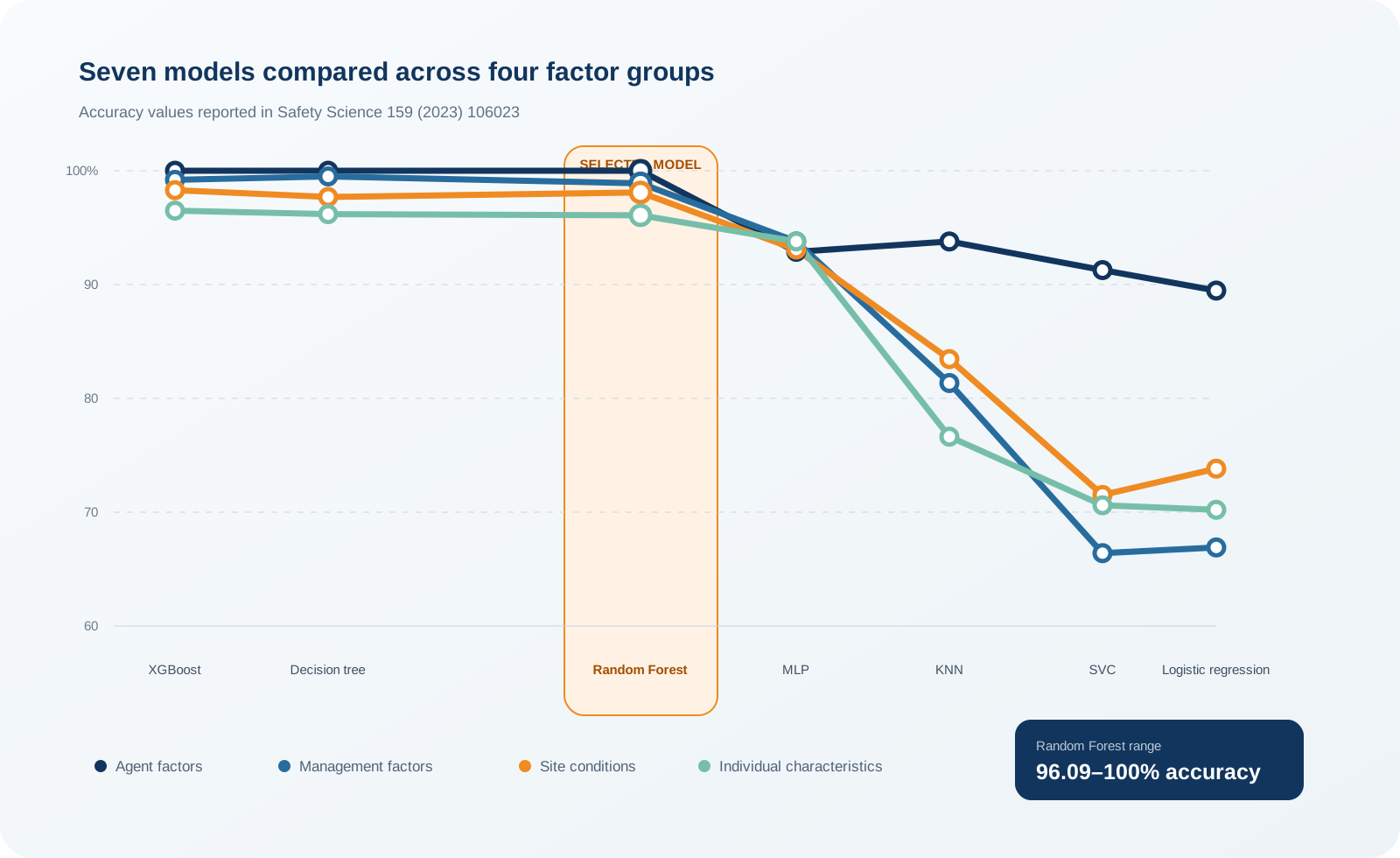
Seven classification approaches were compared rather than presenting one algorithm without a baseline. Random Forest was then examined across the four factor groups and interpreted through model performance and factor importance.
Main finding
Random Forest provided the strongest practical balance for the dataset. Agent factors reached the highest Random Forest accuracy, while the wider comparison showed that several tree-based approaches performed strongly.
Practical meaning
The model can help screen large administrative datasets and focus prevention questions where manual review would be difficult.
Boundary of the result
Feature importance is not causal proof. The model does not replace incident investigation, site-specific risk assessment or professional judgement.