
Pattern and causal reconstruction
Fatality databases, contributing-factor coding, comparative analysis and fault trees for identifying recurrent pathways and control priorities.
My research developed through a sequence of problems: first understanding fatal accident patterns, then reconstructing causal pathways, testing predictive models and finally connecting incident evidence to fire physics and decision systems.
My early research focused on fatal falls in the Malaysian construction sector. Administrative records could show occupations, activities, direct causes and root causes, but a frequency table alone could not explain how those failures combined or which controls should be prioritised.
The work therefore began with pattern analysis, moved into Fault Tree Analysis and then tested comparative machine-learning models. Each method answered a different question. The sequence was more important than the algorithm: first make the evidence comparable, then reconstruct the pathway, then test whether the recorded factors support prediction.
Methodological progressionFault trees helped organise the relationships between management failures, work-process weaknesses and immediate event conditions. Machine learning then tested whether the structured records could discriminate between outcomes. The strongest predictive model could expose influential factors, but it could not prove that those factors independently caused the event.
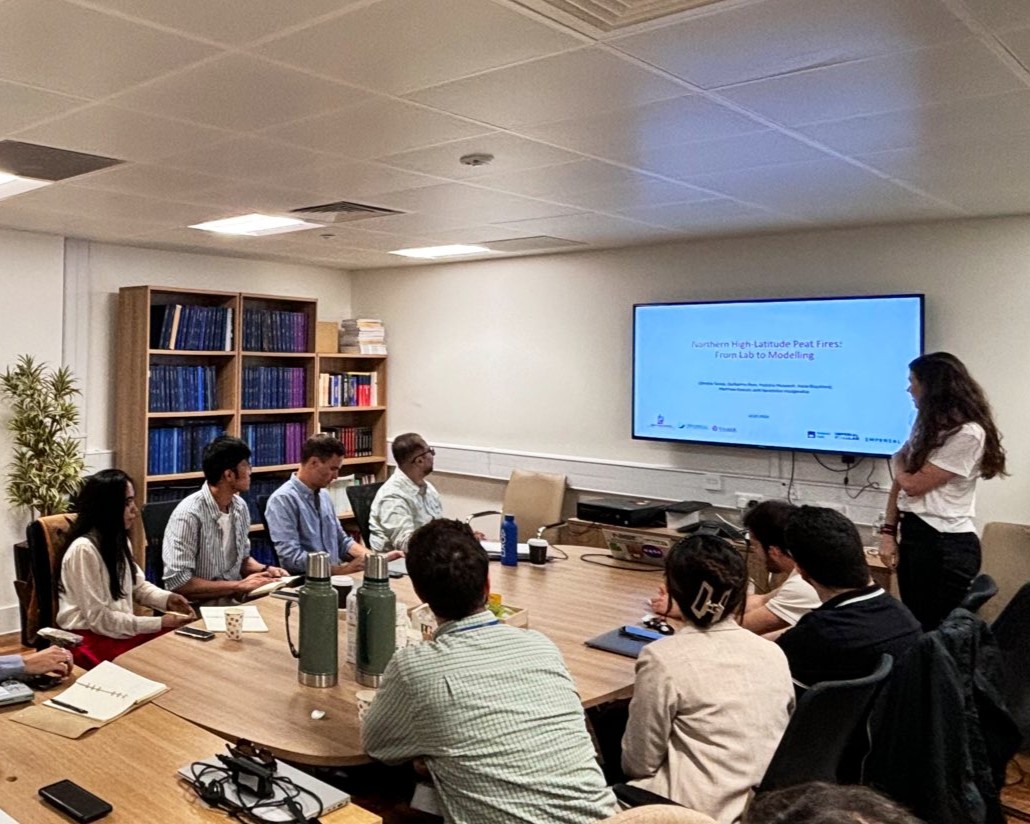
At University College London, the research moved into physics-based urban fire modelling. That work required a different form of discipline: explicit assumptions, fire-spread thresholds, tenability, validation status, version control and outputs that could be interpreted within comparative city scenarios.
Current programmeThe 2026 Fire Technology paper translates 954 hydrogen-related incident records into screening-level physical descriptors such as fuel mass, heat-release rate, flame length and explosion-energy potential. The source records are incomplete, so uncertainty is propagated rather than concealed.
The software projects extend the same philosophy. SEED EIA, Design Safety MY and the QHSE concepts preserve source evidence, assumptions, corrections and audit history so that automation supports professional judgement rather than replacing it.
The portfolio combines quantitative safety analysis, fire modelling, spatial reasoning and research software. The central capability is keeping the claim level aligned with the available evidence.
Fatality databases, contributing-factor coding, comparative analysis and fault trees for identifying recurrent pathways and control priorities.
Model comparison, class imbalance, feature interpretation and strict separation between predictive performance and causal claims.
Urban fire spread, hydrogen fire and explosion descriptors, exposure pathways, tenability and scenario uncertainty.
Building footprints, QGIS, geometry, exposure mapping and integration with wider fragility or multi-hazard workflows.
Evidence chains, page provenance, controlled outputs, reviewer overrides and human-in-the-loop analysis.
Fire and explosion safety, risk methods, ergonomics and quantitative reasoning translated into practical engineering tasks.

Universiti Putra Malaysia. Predictive modelling of fatal falls in the Malaysian construction sector.
Université Batna 2, Algeria.
Université Batna 1, Algeria.
Physics-based urban fire modelling and Integrated Design Project support, 2023–2025.
Fires and explosions, ergonomics, practical teaching and postgraduate research support.
Roles with DMA Construction, Bonatti SPA and Sonatrach.
Google Scholar and ORCID carry the current indexing record. Direct contact is best for collaboration, teaching and technical discussions.