
Research question
Can incomplete hydrogen incident records be translated into transparent, comparable physical descriptors without overstating certainty?
Evidence
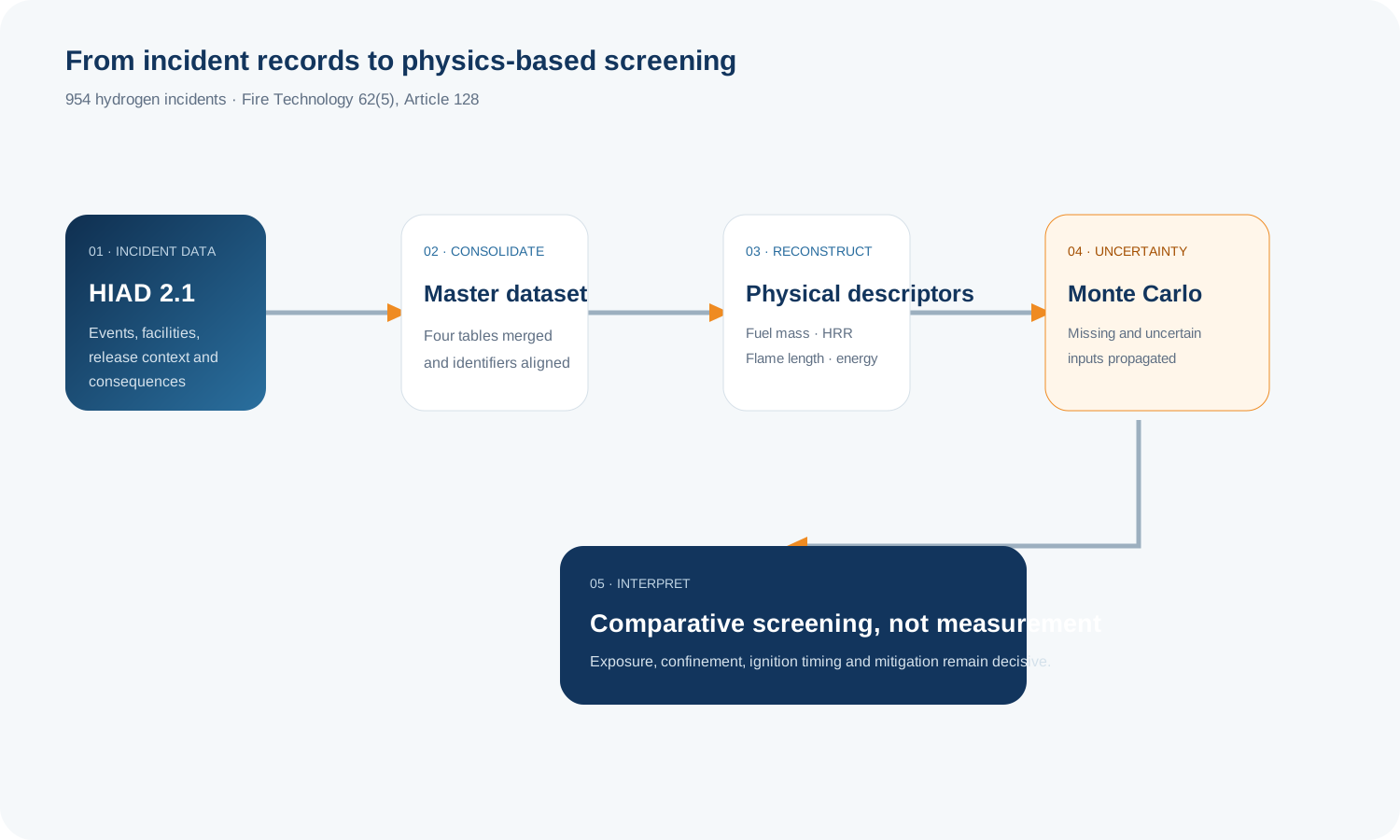
Four HIAD 2.1 tables were consolidated into a master incident dataset containing events, facilities, release context and consequences.
Method
First-order engineering relationships were used to reconstruct fuel inventory, heat-release rate, flame length and explosion-energy potential. Monte Carlo analysis propagated uncertainty from missing or uncertain inputs.
Main finding
The reconstructed incidents span several orders of magnitude in potential energy release, while simple relationships with fatalities and damage remain weak because exposure, confinement, ignition timing, mitigation and reporting completeness materially affect consequence.
Research significance
This is the third flagship paper and the first dedicated fire-safety publication in the first-author programme, extending earlier evidence-led risk work into hydrogen fire and explosion science.
Boundary of the result
The reconstructed quantities are screening estimates, not direct measurements and not validation of a detailed consequence model.