
Research question
How do recurrent management, work-process and immediate-event failures combine into pathways that reach a fatal fall?
Evidence
Narrative records from 128 fatal work-at-height cases were coded into contributing factors, immediate causes and root causes.
Method
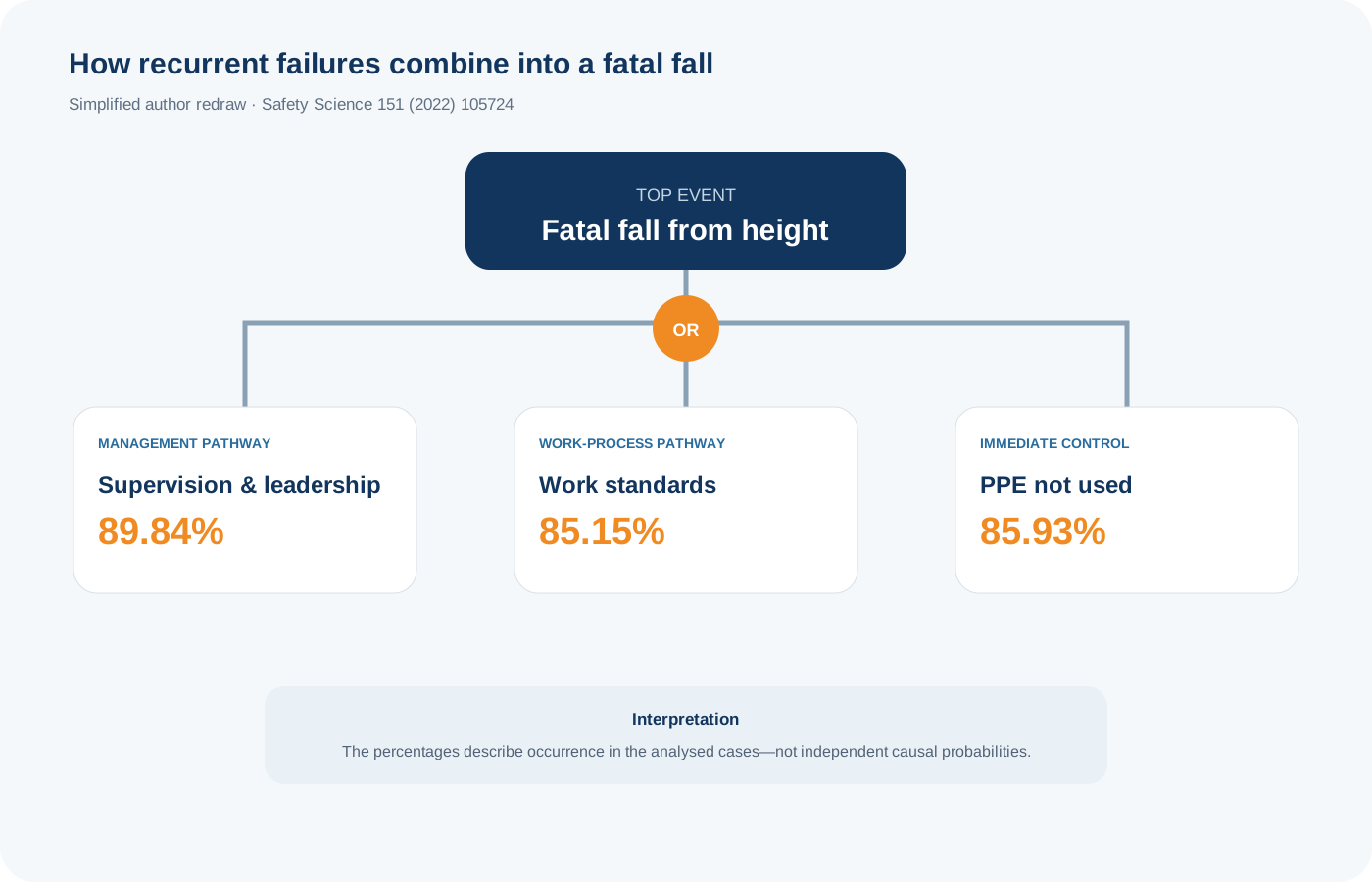
The coded evidence was organised into fault-tree pathways so that combinations of failure could be examined rather than treating every recorded cause as independent.
Main findings
The highest-occurrence priorities included inadequate supervision and leadership at 89.84%, failure to use personal protective equipment at 85.93%, and absent or poorly followed work standards at 85.15%.
Practical meaning
The framework moves prevention attention upstream—from the final unsafe act toward supervision, standards and control implementation that can interrupt the pathway earlier.
Boundary of the result
The percentages describe occurrence in the analysed cases. They do not mean that one factor alone independently causes a fatality.